Early Orthodontics at CG Orthodontics
Healthy Smiles Start With the Right Timing
Early orthodontic care isn't about putting every child in braces as soon as possible. It's about understanding how your child's teeth, bite, and jaws are developing so that treatment can begin at the right time, if it's needed at all.

- Evaluation First Understand your child’s development
- Individualized Timing Treatment when it’s needed
- Yardley & Richboro Welcoming Bucks County families
Your child. Their own timeline.
Sometimes the best recommendation is treatment. Sometimes it's to wait.
At CG Orthodontics, Dr. George and Dr. Cogan provide early orthodontic evaluations for children at our Yardley and Richboro offices, welcoming families from Newtown and surrounding Bucks County communities.
An early evaluation gives our orthodontists an opportunity to identify developing concerns, monitor growth, and determine whether your child would benefit from treatment now or simply needs to be watched as they grow.
An early look ahead
Why Should My Child See an Orthodontist at Age 7?
The American Association of Orthodontists recommends that children have their first orthodontic evaluation by age 7.
At this age, children typically have a combination of baby and permanent teeth, and their jaws are still developing. This allows an orthodontist to evaluate how the teeth are coming in, how the upper and lower jaws are growing, and how the bite is developing.
An age 7 evaluation does not mean your child will need braces or another orthodontic treatment right away. In fact, many children won't.
Instead, the goal is to identify potential concerns early enough that Dr. George or Dr. Cogan can determine the best time to address them.
During an early orthodontic evaluation, we may look at tooth eruption, crowding and available space, bite relationships, jaw growth and symmetry, missing or extra teeth, protruding front teeth, and oral habits that may be affecting development.
If everything is developing normally, that's great news. We can continue monitoring your child's smile as they grow.
Understanding Phase 1
What is Phase 1 Treatment?
Phase 1 orthodontic treatment, sometimes called interceptive orthodontic treatment, takes place while a child still has a mixture of baby and permanent teeth.
The purpose isn't necessarily to create a finished, perfectly straight smile at a young age. Instead, Phase 1 treatment is used when there is an orthodontic concern that may benefit from being addressed while the teeth and jaws are still developing.
Depending on your child's individual needs, early treatment may be used to help guide jaw or dental arch development, create space for developing permanent teeth, address certain bite problems, reduce the risk of injury to protruding front teeth, or address harmful oral habits.
After Phase 1 is complete, there is often a period of growth and observation while additional permanent teeth erupt. Some children may eventually benefit from a second phase of orthodontic treatment, such as braces or clear aligners.
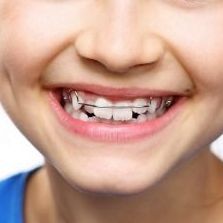
Phase 1 treatment may involve fixed or removable appliances, and that treatment commonly lasts approximately 9 to 12 months, although every child's needs and timeline are different.
Growth & development
Growing Smiles Need Individualized Care
Children's smiles are constantly changing. Baby teeth are lost, permanent teeth erupt, jaws grow, and bite relationships continue developing throughout childhood and adolescence.
That's why timing matters in orthodontics.
Early evaluations allow Dr. George and Dr. Cogan to monitor these changes and identify whether a developing concern should be treated now or observed over time.
For certain orthodontic concerns, a child's natural growth can create opportunities for treatment that may not exist in the same way later.
But growth doesn't mean every developing smile needs intervention.
Our goal is to understand your child's individual development and recommend treatment when it provides a meaningful benefit.
What parents may notice
Signs Your Child May Benefit From an Evaluation
Parents don't need to diagnose an orthodontic problem themselves. That's what the evaluation is for.
However, some signs may indicate that it's worth having your child's smile checked.
These can include crowded or misplaced teeth, noticeable spacing, an overbite or underbite, a crossbite, difficulty biting or chewing, early or late loss of baby teeth, protruding front teeth, jaws that appear to shift when your child bites, or persistent oral habits such as thumb sucking.
Sometimes orthodontic concerns are obvious. Other times, the teeth may appear relatively straight even though there is an issue developing with the bite or jaw relationship.
That's one reason an early orthodontic evaluation can be helpful even when a parent isn't sure whether anything is wrong.
Monitoring is meaningful care
Sometimes the Best Next Step Is to Wait
Your child’s first orthodontic visit doesn’t have to end with a treatment plan.
Sometimes Dr. George and Dr. Cogan will evaluate a child and determine that everything looks good, but they aren’t ready for treatment yet. Other times, we may identify something we want to watch as your child’s permanent teeth erupt and jaws continue to grow.
That’s still a valuable visit.
When treatment isn’t needed yet, CG Orthodontics can help you understand what we’re watching, why we’re waiting, and when we’d like to see your child again.
Instead of wondering whether you’re starting too early or waiting too long, you’ll have an orthodontic team helping you follow your child’s development and determine when the timing is right.
Answers for your family
Early Treatment FAQs
Learn more about early evaluations, Phase 1 treatment, and the next steps for your child’s smile.
Ask Us About Your Child’s SmileWhat age should my child first see an orthodontist?
The American Association of Orthodontists recommends an orthodontic evaluation by age 7. At this age, an orthodontist can evaluate developing permanent teeth, jaw growth, and bite relationships and identify concerns that may benefit from monitoring or early treatment.
Does my child need braces at age 7?
Not necessarily. An age 7 orthodontic evaluation is intended to assess development and identify potential concerns. Many children will not need treatment at this age and may simply be monitored as they grow.
What is Phase 1 orthodontic treatment?
Phase 1 is orthodontic treatment performed while a child still has a mixture of baby and permanent teeth. It is used when addressing a specific developing orthodontic concern earlier may be beneficial.
What's the difference between an evaluation and early treatment?
An evaluation is simply an assessment of your child's teeth, bite, and jaw development. Early treatment is recommended only when Dr. George or Dr. Cogan determines that an orthodontic concern would benefit from intervention at that stage of development.
What problems can early orthodontic treatment address?
Depending on the child, early treatment may address concerns involving crowding, spacing, crossbites, overbites, underbites, jaw development, protruding front teeth, and certain oral habits.
How do I know if my child needs early treatment?
The best way to know is through an orthodontic evaluation. Dr. George or Dr. Cogan can assess how your child's teeth, jaws, and bite are developing and explain whether treatment is recommended now, later, or not at all.
What happens if my child isn't ready for treatment?
If treatment isn't needed yet, your child's development can be monitored over time. This allows the orthodontist to follow tooth eruption, jaw growth, and bite development and recommend treatment if and when the timing becomes appropriate.
How long does Phase 1 treatment take?
Early treatment duration varies depending on the child's specific orthodontic needs but typically ranges from 9 to 12 months. After this initial phase, there might be a resting period before starting further treatments as needed.
Will my child need braces after Phase 1 treatment?
Possibly. Phase 1 treatment addresses specific concerns during an earlier stage of development, but some children will still need comprehensive orthodontic treatment after more permanent teeth have erupted.
Can early treatment help with an underbite or crossbite?
Certain underbites and crossbites may benefit from early orthodontic evaluation and treatment.
Does my child need a dentist referral to see an orthodontist?
No. Families can contact CG Orthodontics directly to schedule an orthodontic evaluation.
What happens at my child's first orthodontic evaluation?
Dr. George or Dr. Cogan will evaluate your child's teeth, bite, and jaw development.
How much does early orthodontic treatment cost?
The cost depends on whether treatment is needed and the type and complexity of treatment recommended. If treatment is recommended, CG Orthodontics can review the cost, applicable insurance benefits, and available payment options with your family.
Explore FinancingWhere can I find an orthodontist for my child near Newtown, PA?
CG Orthodontics welcomes families from Newtown and surrounding Bucks County communities at its nearby Yardley office, as well as its Richboro location. Parents can schedule an early orthodontic evaluation directly without waiting for a referral.
The first step is understanding
Not Sure If It's Time?
That's Exactly What the First Visit Is For.
You don't have to determine whether your child needs braces, Phase 1 treatment, or no treatment at all before scheduling an orthodontic evaluation.
That's our job.
Dr. George and Dr. Cogan can evaluate how your child's teeth, bite, and jaws are developing and help you understand whether the best next step is treatment now, monitoring as they grow, or simply checking back later.
CG Orthodontics provides early orthodontic evaluations at our Yardley and Richboro offices, welcoming families from Newtown and throughout surrounding Bucks County communities.